


Highlights
[Journal Article] Theorising Legitimacy in ‘Science-Based’ Transnational Rule Making: The Science Based Targets initiative by Mark Ortega
APCEL’s Academic Fellow Mark Ortega’s article, “Theorising Legitimacy in ‘Science-Based’ Transnational Rule Making: The Science Based Targets initiative”, has been published in the Oxford Journal of Legal Studies. In his article, Mark explores how we can think about the accountability and legitimacy of the Science Based Targets initiative (SBTi), which is an authoritative rule maker in voluntary ‘net-zero’ target setting by corporations. Mark employs a theoretical framework which examines the nexus between SBTi’s institutional goals and the operationalisation of these goals through SBTi’s standard-setting and, relatedly, also explores what an appeal to ‘science-based’ methods requires.
More >
[Working Paper] Transnational Litigation and the Quest for Climate Justice in the Global South
This paper examines the potential for transnational litigation to advance corporate climate accountability. It also seeks to identify pathways for future research that can underpin a rewarding and meaningful research agenda on climate justice in the Global South.
More > (opens in new tab)
APCEL and Universitas Padjadjaran discuss collaboration in climate change law research and education
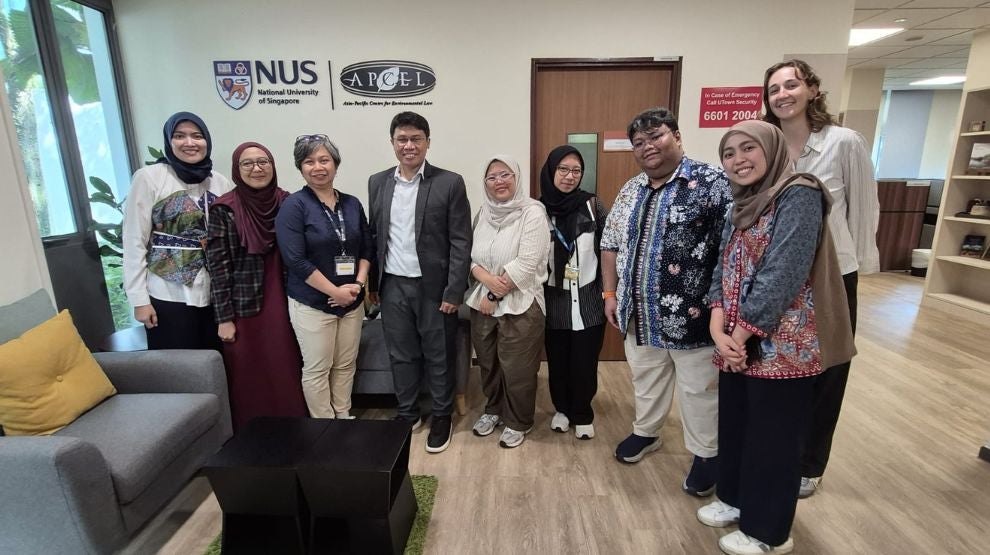
The Asia-Pacific Centre for Environmental Law (APCEL) at NUS Law welcomed representatives from the Faculty of Law at Universitas Padjadjaran for a meeting to explore opportunities for collaboration in climate change law research and education on 21 July 2026. Representing APCEL, Dr. Linda Yanti Sulistiawati introduced the current research and collaborations going on, while participants from Universitas Padjadjaran shared their expertise across spatial planning, marine conservation, renewable energy, water management, agrarian law, and climate justice. The discussions reflected a shared commitment to strengthening climate change law research and education through academic collaboration.
More > (opens in new tab)
Planning Law Regimes In Asian Cities
Chapters in this volume originated in papers presented at the the Asia-Pacific Centre for Environmental Law (APCEL) Workshop on Planning Law in Asian Cities held at National University of Singapore Faculty of Law on 16 April 2019. They only reflect the law and factual circumstances as they stood at the time of writing or first publication.
More >